A broken window outside normal working hours can leave a property exposed and unsafe. An emergency glazing callout follows a practical sequence, from gathering information and dispatching a local glazier to securing the opening. Knowing what happens at each stage helps you prepare, ask sensible questions and avoid unrealistic expectations.
When glass breaks after normal business hours, the situation can feel chaotic. A damaged window or door may expose the building to weather, intruders and sharp fragments. Calling 24/7 Glaziers starts a structured response rather than guaranteeing an instant replacement in every case. The team first gathers details, assesses urgency and sends an available local professional. On arrival, the glazier makes the area safe, inspects the damage and decides whether immediate glazing or temporary boarding is appropriate. Understanding this process helps you provide useful information, prepare the property and make informed decisions without expecting every unit to be permanently replaced during one overnight visit.
The First Few Minutes: Making Contact
The emergency glazing process begins with a telephone call or callback request. Clear information allows the service provider to understand the problem and arrange an appropriate response.
1. Your Call Is Assessed
You will usually be asked for the property address, contact details and type of damage. The adviser may also need to know whether the affected area is accessible and if the building is domestic or commercial.
Useful details include:
- Whether the glass is cracked, shattered or missing
- Whether the opening can be secured from inside
- The approximate size and location of the pane
- Whether the frame or door is damaged
- Any immediate danger to occupants or visitors
Photographs may help when the service accepts them, but they cannot always replace an on-site assessment.
Dispatching an Emergency Glazier
Once the problem is understood, an available local glazier can be assigned. You should receive an estimated arrival window and an explanation of what will happen next. Emergency glazing providers may aim to attend within 30 to 90 minutes, although the actual response time can vary depending on location, weather, traffic and current demand. Keep your phone available in case the glazier needs directions or further information, and ensure someone authorised to provide access and approve the proposed work is present at the property.
On-Site Assessment and Immediate Safety Measures
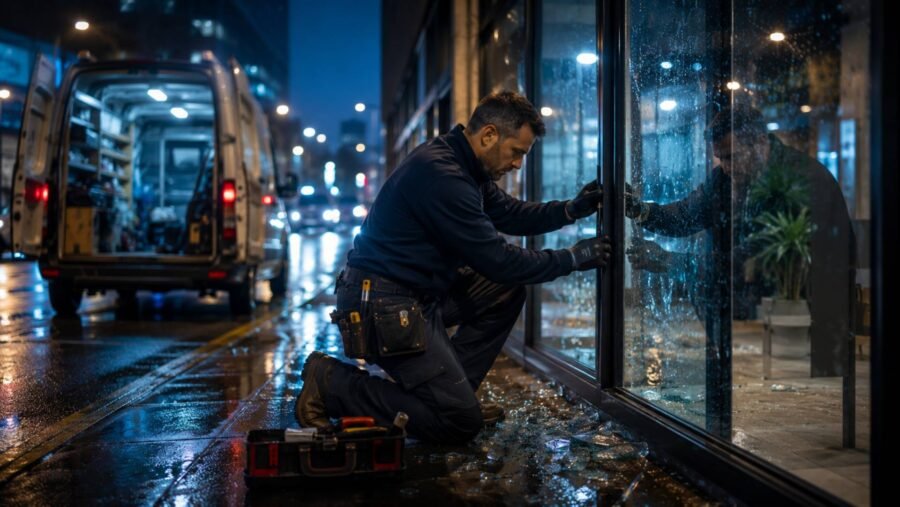
Upon arrival, the glazier will prioritise safety by inspecting the broken glass, surrounding frame, access conditions and any immediate risks. Loose shards may be removed carefully, while children, pets, residents and members of the public should remain clear of the affected area. The glazier will then determine whether an immediate replacement is possible. Common glass types may be carried in the vehicle and cut on site, but double-glazed units, specialist safety glass, unusual shapes, damaged shop fronts and panes with frame damage may need to be ordered. In these situations, emergency boarding provides secure temporary protection until the correct materials are available.
Agreeing on the Work
Before authorising repairs, confirm what the quoted charge covers. Ask whether it includes labour, materials, boarding, disposal and any later return visit.
The Solution and Costs Are Confirmed
Professional 24/7 Glaziers should explain whether the proposed work is temporary or permanent. If a special pane is required, the opening will usually be measured accurately so that the replacement can be ordered.
Request written details where possible. Keep invoices and photographs if the damage may form part of an insurance claim. Do not assume that an insurer will automatically reimburse every emergency expense.
After the Immediate Callout
If the initial visit results in a temporary repair or emergency boarding, a follow-up appointment will be required to complete the permanent work. The replacement glass may need to be manufactured or sourced before the glazier can return. Confirm the expected timeframe, who will provide updates and whether any further payment is required. Until the final repair is completed, do not interfere with the boarding or temporary covering. Report any movement, water entry or signs of attempted access to the glazing provider promptly.
FAQs
Will my glass always be replaced during the first visit?
No. Standard glass may be available, but double-glazed or specialist units often need to be ordered.
Should I remove broken glass before help arrives?
Avoid handling shards unless immediate safety requires action. Keep people away and wait for professional assistance.
Can a glazier repair a damaged frame?
Some window and door repairs may be possible, although severe frame damage could require separate or follow-up work.
Is emergency boarding weatherproof?
It provides short-term protection, but it is not intended to perform like a permanent glazed unit.
What should I prepare before calling?
Have the address, damage description, access details and approximate measurements ready.
Final Overview
An out-of-hours glazing callout follows a clear sequence: initial assessment, dispatch, on-site inspection, risk control and either immediate repair or temporary boarding. Permanent replacement is not always possible during the first visit because specialist glass and sealed units may need to be measured and ordered.
You can support a faster response by describing the damage accurately, keeping the area clear and ensuring an authorised person is available. Confirm estimated arrival times, likely costs and whether the proposed work is temporary or permanent. Retain photographs, quotations and invoices if insurance may be involved. Most importantly, do not touch unstable glass or attempt an unsafe repair. A calm, informed approach makes an urgent situation easier to manage and helps 24/7 Glaziers secure the property before arranging the correct long-term solution.