Premium packaging does not require an excessive budget. Small independent brands can create memorable unboxing moments by choosing a few coordinated materials, controlling print costs and removing unnecessary extras. The strongest presentation feels thoughtful, protects the product and reflects the brand consistently without allowing packaging costs to reduce already narrow profit margins.
Customers often judge a product before they use it. The colours, materials and arrangement they see during unboxing can influence how valuable and trustworthy a small brand feels. Yet independent businesses rarely have the packaging budgets of established retailers. The solution is not to add more layers, but to make every element purposeful. Branded tissue, a well-designed card and luxury kraft paper bags can create a polished experience without excessive spending. By focusing on consistency, protection and restrained customisation, smaller brands can turn routine packaging into a memorable customer touchpoint while keeping unit costs, storage needs and preparation time firmly under control.
Begin With a Clear Packaging Budget
Premium presentations should support profit rather than consume it. Set a maximum packaging cost for each order before comparing materials, finishes and suppliers.
1. Calculate the Complete Cost Per Order
Include more than the price of the outer bag or box. Tissue, stickers, cards, inserts, tape, storage and packing time all contribute to the true cost.
Review:
- Material and printing costs
- Minimum order quantities
- Delivery and storage expenses
- Time required to assemble each order
A complicated arrangement may look impressive but become expensive to prepare. Simple packaging that can be assembled quickly is often more practical as order volumes grow.
Build a Recognisable Visual System
A premium unboxing experience depends on visual consistency. Choose a limited colour palette, one or two typefaces and a clear logo treatment that can be repeated across the outer packaging, tissue and printed inserts. These elements should feel connected without placing the logo on every surface. A restrained design generally appears more polished than a mixture of competing patterns, messages and finishes. Use the same tone across thank-you notes, care instructions and product information to improve clarity, strengthen brand recognition and create a professional customer experience.
Spend Where Customers Notice Quality
Not every packaging component requires an expensive finish, so direct the budget towards the elements customers are most likely to handle, retain or carry. Foil blocking, embossing, debossing, interior printing and ribbon handles can add distinction, but combining several options may increase costs unnecessarily. Instead, choose one premium feature that best reflects the brand. Strong luxury kraft paper bags with crisp printing and comfortable handles may create enough visual impact without additional decoration, while remaining suitable for retail purchases, gifts, events and product launches. Request artwork guidance and approve a proof before production, as fine details, small text and certain colours may appear differently on brown kraft than on a white screen.
Design Around the Product
Attractive packaging must still protect the product effectively. Measure the complete item, including any protective wrapping, before choosing a bag or box. Allow enough clearance for easy packing without leaving excessive empty space, as oversized packaging can make the product appear less substantial and require additional filling material. The product’s weight and shape should also guide decisions about paper thickness, handle strength and base reinforcement. Maintaining a small range of versatile, standard packaging sizes can reduce costs, simplify stock management and prevent independent brands from storing numerous formats that may be used infrequently.
Create a Simple Unboxing Sequence
Unboxing should feel considered rather than obstructive. Customers should understand what to open first and reach the product without cutting through several unnecessary layers.
Arrange the Contents With Purpose
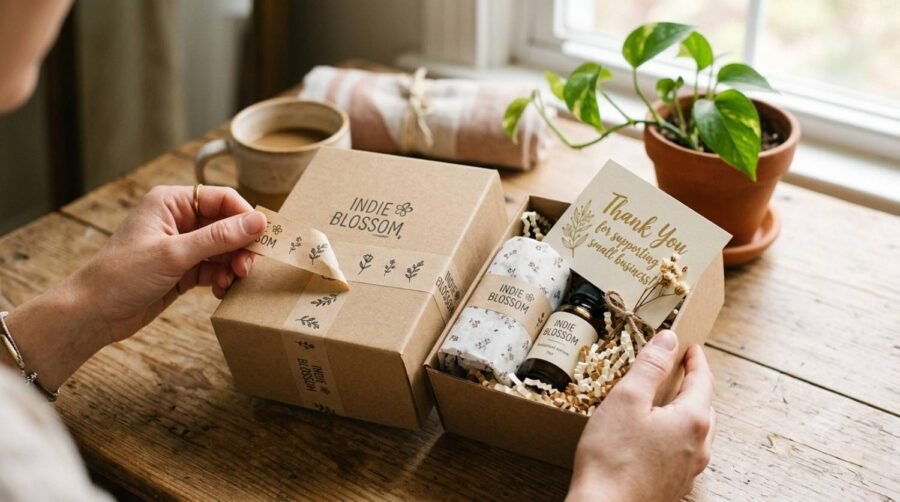
A straightforward sequence might include:
- A neat outer bag or mailing layer.
- Tissue wrapped around the product.
- One branded seal or sticker.
- A useful care or thank-you card.
Avoid adding materials solely to fill space. Every component should protect the purchase, explain something valuable or reinforce the brand.
Order Carefully and Reduce Waste
Bulk orders can lower the unit price, but only when the packaging will be used. Large quantities create storage demands and increase the risk of waste after a rebrand.
Approve Before Committing
Confirm dimensions, material, colours, handle type, print position and production times. Ask whether the chosen construction is recyclable and avoid making broad environmental claims unless they can be supported.
Keep future designs flexible. Packaging centred on the main brand identity can be used throughout the year, while low-cost inserts can introduce seasonal messages.
FAQs
Can low-cost packaging still look luxurious?
Yes. Accurate sizing, coordinated colours and clean printing often matter more than numerous decorative additions.
Which feature offers the strongest visual impact?
A well-printed logo on a sturdy outer bag or box usually creates an immediate impression.
Should every packaging layer be branded?
No. Selective branding creates a cleaner appearance and controls printing costs.
Is buying the largest quantity always cheaper?
The unit price may be lower, but unused stock, storage and outdated designs can remove the savings.
How can brands test packaging before ordering?
Request material samples, check measurements using a plain mock-up and review a digital or physical proof where available.
The Final Word
A premium unboxing experience comes from careful decisions, not an excessive number of materials. Small independent brands should begin with a realistic cost per order, then create a simple visual system that can be repeated consistently. Accurate sizing, reliable product protection and one distinctive finish can make packaging feel considered without weakening profit margins.
Before placing an order, test dimensions, review artwork and confirm production times, minimum quantities and storage requirements. Choose recyclable materials where suitable, but describe their environmental qualities accurately. Keep permanent packaging versatile and use affordable cards or inserts for changing campaigns. The result should be easy to assemble, pleasant to open and recognisable at a glance. When selected in appropriate sizes and printed with restraint, luxury kraft paper bags can provide a strong finishing touch that supports product presentation, customer recall and practical reuse without pushing a small brand beyond its budget.